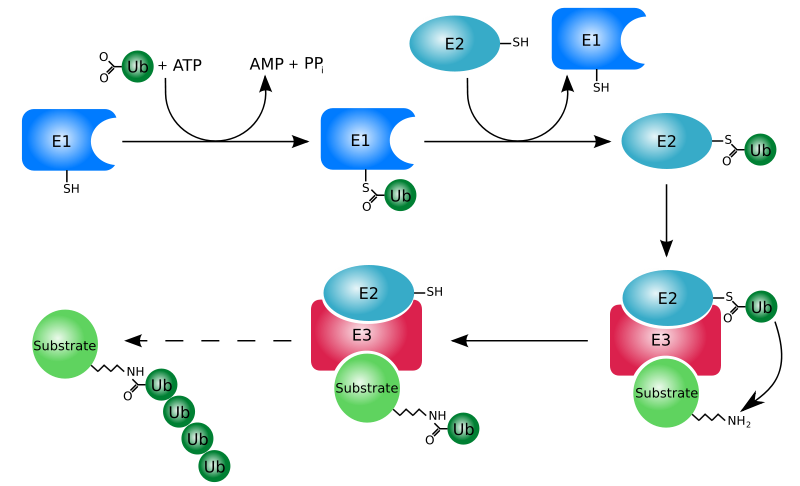
Ubiquitin. Ubiquitin is a small (8.6 kda) regulatory protein found in most tissues of eukaryotic organisms, i.e. Ubiquitin ubiquitin is a highly conserved small regulatory protein that is ubiquitous in eukaryotes. It is made up of 76 amino acids and is involved in many cellular processes. Targeting the ubiquitin proteasome system in cancer: It was discovered in 1975 by gideon goldstein and further characterized throughout the 1970s and 1980s. Ubiquitin is a small (8.5 kda) regulatory protein that has been found in almost all tissues (ubiquitously) of eukaryotic organisms. It plays a big role in regulating the cell cycle, including dna repair, embryogenesis, the regulation of transcription, and apoptosis. This technique allows the enrichment of ubiquitinated peptides, starting from plant cell. It was discovered in 1975 1 by gideon goldstein and further characterized throughout the 1970s and 1980s. Scientists discover new way in which ubiquitin modifies transcriptional machinery. Ubiquitination (or ubiquitylation) refers to. Ubiquitin is a 76 amino acid (aa) protein that is ubiquitously expressed in all eukaryotic organisms. To gain insight into the arabidopsis ubiquitinome, we used the ubiquitin cofradic technology (stes et al., 2014) with some minor modifications with respect to protein preparation. Ubiquitin is a small protein that is found in almost all cellular tissues in humans and other eukaryotic organisms, which helps to regulate the processes of other proteins in the body. The most prominent function of ubiquitin is labeling proteins for proteasomal degradation (see:
Ubiquitin - Ubiquitin Signaling
Ubiquitin Antibody (13-1600). Ubiquitin is a small protein that is found in almost all cellular tissues in humans and other eukaryotic organisms, which helps to regulate the processes of other proteins in the body. Ubiquitin ubiquitin is a highly conserved small regulatory protein that is ubiquitous in eukaryotes. To gain insight into the arabidopsis ubiquitinome, we used the ubiquitin cofradic technology (stes et al., 2014) with some minor modifications with respect to protein preparation. Ubiquitin is a small (8.5 kda) regulatory protein that has been found in almost all tissues (ubiquitously) of eukaryotic organisms. Targeting the ubiquitin proteasome system in cancer: Ubiquitin is a small (8.6 kda) regulatory protein found in most tissues of eukaryotic organisms, i.e. It plays a big role in regulating the cell cycle, including dna repair, embryogenesis, the regulation of transcription, and apoptosis. It was discovered in 1975 1 by gideon goldstein and further characterized throughout the 1970s and 1980s. It was discovered in 1975 by gideon goldstein and further characterized throughout the 1970s and 1980s. The most prominent function of ubiquitin is labeling proteins for proteasomal degradation (see: Scientists discover new way in which ubiquitin modifies transcriptional machinery. It is made up of 76 amino acids and is involved in many cellular processes. This technique allows the enrichment of ubiquitinated peptides, starting from plant cell. Ubiquitination (or ubiquitylation) refers to. Ubiquitin is a 76 amino acid (aa) protein that is ubiquitously expressed in all eukaryotic organisms.
Ubiquitin/Proteasome Pathway Antibodies - Creative Diagnostics from www.creative-diagnostics.com
Ubiquitin is a highly conserved 8.5 kda protein that is abundant in all types of cells and exists as a free molecule or attached to a range of different intracellular more recently, ubiquitin was found to also have regulatory functions that are distinct from protein degradation. …first step a molecule called ubiquitin (from the latin ubique, meaning everywhere, because it occurs in so many different cells and organisms) attaches to a protein targeted for destruction and accompanies it to a. A chiefly eukaryotic protein that when 2004 ubiquitin tagging directs the movement of important proteins in the cell, determining, for example, whether they end up on the cell membrane or in an internal vacuole, where they are destroyed without the proteasome's help.— As such, they are diverse in terms of composition and function, regulating many different processes from glucose sensing and dna replication to limb patterning and. Reminiscent of a code, the various ubiquitin modications adopt distinct conformations and lead to different outcomes in cells. Ubiquitin is a small protein that is found in almost all cellular tissues in humans and other eukaryotic organisms, which helps to regulate the processes of other proteins in the body. It is also involved in the maintenance of chromatin structure, the regulation of gene expression, and the stress response.
Ubiquitin is a small (8.6 kda) regulatory protein found in most tissues of eukaryotic organisms, i.e., it is found ubiquitously.
The functions and mechanisms of ubiquitination are areas of extensive study, and yet the dynamics and regulation of even free (that is, unconjugated) ub are poorly understood. This gene encodes ubiquitin, one of the most conserved proteins known. Ubiquitin is a small (8.6 kda) regulatory protein found in most tissues of eukaryotic organisms, i.e. The posttranslational modication with ubiquitin, a process referred to as ubiquitylation, controls almost every process in cells. Ubiquitin has a major role in targeting cellular proteins for degradation by the 26s proteosome. It plays a big role in regulating the cell cycle, including dna repair, embryogenesis, the regulation of transcription, and apoptosis. | meaning, pronunciation, translations and examples. Find out information about ubiquitin. Ubiquitin definition, a small protein, present in all eukaryotic cells, that participates in the destruction of defective proteins and in the synthesis of new proteins. As such, they are diverse in terms of composition and function, regulating many different processes from glucose sensing and dna replication to limb patterning and. Technology platforms for internet access, enterprise, and smarthome applications. Ubiquitin is a small protein that is found in almost all cellular tissues in humans and other eukaryotic organisms, which helps to regulate the processes of other proteins in the body. It is also involved in the maintenance of chromatin structure, the regulation of gene expression, and the stress response. Ubiquitin is a highly conserved 8.5 kda protein that is abundant in all types of cells and exists as a free molecule or attached to a range of different intracellular more recently, ubiquitin was found to also have regulatory functions that are distinct from protein degradation. The most prominent function of ubiquitin is labeling proteins for proteasomal degradation (see: Ubiquitin is a 76 amino acid (aa) protein that is ubiquitously expressed in all eukaryotic organisms. It is made up of 76 amino acids and is involved in many cellular processes. It was discovered in 1975 1 by gideon goldstein and further characterized throughout the 1970s and 1980s. British dictionary definitions for ubiquitin. Ubiquitin is a small (8.5 kda) regulatory protein that has been found in almost all tissues (ubiquitously) of eukaryotic organisms. …first step a molecule called ubiquitin (from the latin ubique, meaning everywhere, because it occurs in so many different cells and organisms) attaches to a protein targeted for destruction and accompanies it to a. 2 four genes in the human genome code for ubiquitin: Ubiquitin can be covalently linked to many cellular proteins by. Scientists discover new way in which ubiquitin modifies transcriptional machinery. Ubiquitin is a small (8.6 kda) regulatory protein found in most tissues of eukaryotic organisms, i.e., it is found ubiquitously. This technique allows the enrichment of ubiquitinated peptides, starting from plant cell. Ubiquitin consists of 7 lysine. Reminiscent of a code, the various ubiquitin modications adopt distinct conformations and lead to different outcomes in cells. It was discovered in 1975 by gideon goldstein and further characterized. A chiefly eukaryotic protein that when 2004 ubiquitin tagging directs the movement of important proteins in the cell, determining, for example, whether they end up on the cell membrane or in an internal vacuole, where they are destroyed without the proteasome's help.— It was discovered in 1975 by gideon goldstein and further characterized throughout the 1970s and 1980s.
Ubiquitin - Ubiquitin Consists Of 7 Lysine.
Ubiquitin - Frontiers | Hijacking Of The Host Scf Ubiquitin Ligase ...
Ubiquitin . Ubiquitin C Gene: Structure, Function, And Transcriptional ...
Ubiquitin , …First Step A Molecule Called Ubiquitin (From The Latin Ubique, Meaning Everywhere, Because It Occurs In So Many Different Cells And Organisms) Attaches To A Protein Targeted For Destruction And Accompanies It To A.
Ubiquitin , The Most Prominent Function Of Ubiquitin Is Labeling Proteins For Proteasomal Degradation (See:
Ubiquitin , Ubiquitination (Or Ubiquitylation) Refers To.
Ubiquitin . The Most Prominent Function Of Ubiquitin Is Labeling Proteins For Proteasomal Degradation (See:
Ubiquitin - The Functions And Mechanisms Of Ubiquitination Are Areas Of Extensive Study, And Yet The Dynamics And Regulation Of Even Free (That Is, Unconjugated) Ub Are Poorly Understood.
Ubiquitin , Ubiquitin Is A Small (8.6 Kda) Regulatory Protein Found In Most Tissues Of Eukaryotic Organisms, I.e.
Ubiquitin - Ubiquitin Is A 76 Amino Acid (Aa) Protein That Is Ubiquitously Expressed In All Eukaryotic Organisms.